BranchPattern's Embodied Carbon Benchmark Study Earns Prestigious EDRA CORE Recognition

BranchPattern is committed to advancing evidence-based research that drives measurable progress in building decarbonization. That commitment has been recognized with a 2026 Certificate of Research Excellence (CORE) from the Environmental Design Research Association (EDRA), presented on May 29 at the EDRA57 conference at the University of Massachusetts Amherst.
The EDRA CORE recognition is bestowed on practice-based research studies that exemplify the highest standards in research rigor, innovation, and practical impact on the design industry. Applications undergo a rigorous, double-blind review by an interdisciplinary panel of experts and are evaluated on two dimensions: Research Rigor — the use of recognized research approaches to produce valid results — and Research Impact — pushing the boundaries of practice through measurable value to stakeholders and the industry.
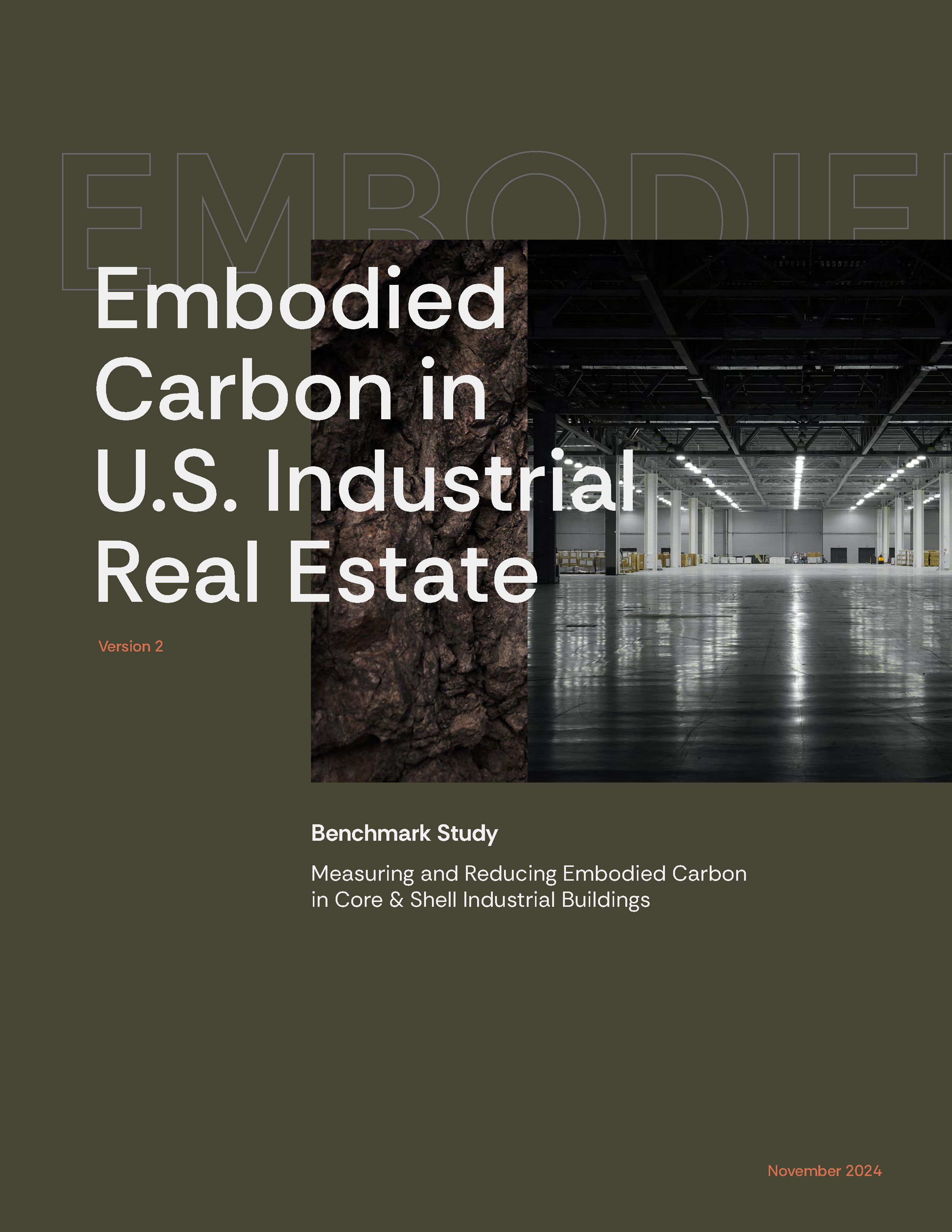
BranchPattern's study, Embodied Carbon in U.S. Industrial Real Estate, establishes a standardized, data-driven approach to measuring and reducing embodied carbon in core and shell industrial buildings across the United States. Drawing from a dataset of 94 whole-building life cycle assessments (WBLCAs) contributed by 10 industry-leading partners — including Prologis, Link Logistics, Bridge Industrial, Brookfield Properties, Affinius Capital, Ambrose, Hillwood, IDI Logistics, Oxford Properties, and WPT Capital Advisors — the study provides comparative benchmarks, identifies the most significant contributors to embodied carbon emissions, and highlights actionable strategies to support decarbonization within the industrial sector.
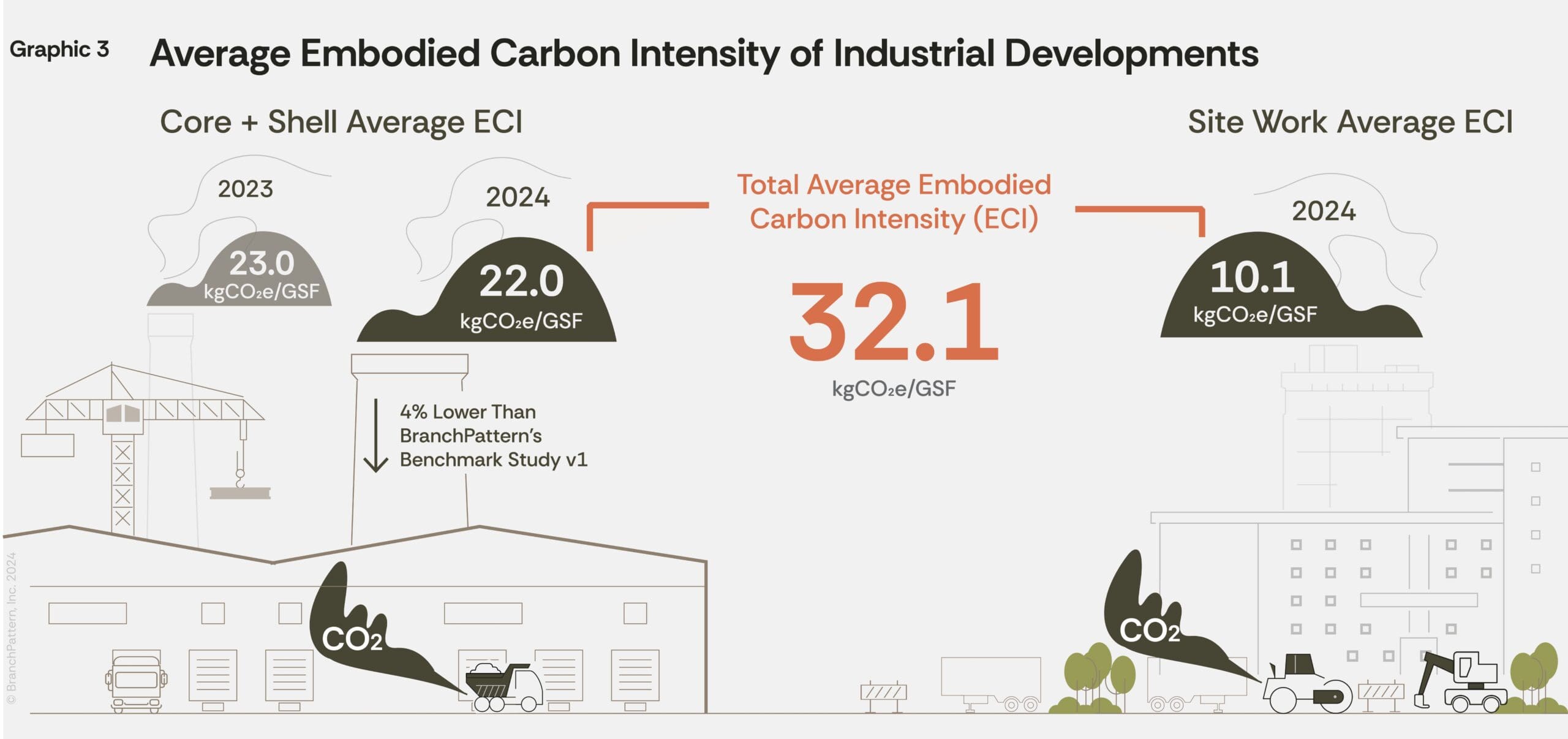
Among its key findings, the study revealed that the average embodied carbon intensity (ECI) of U.S. industrial core and shell buildings decreased from 23.0 to 22.0 kg CO₂e per gross square foot — a 4% reduction year over year — reflecting growing attention to low-carbon materials and earlier integration of embodied carbon analysis in the design process. The second version of the study also expanded scope to include site work emissions, establishing a total benchmark of 32.1 kg CO₂e/GSF — a metric that is increasingly relevant as green building certifications begin to address site-level impacts.

"In the rapidly evolving landscape of sustainable design and construction, the spotlight on carbon reduction has never been brighter," said Kristy Walson, PE, LEED Fellow, Principal and Building Science Practice Lead at BranchPattern, in a https://concreteproducts.com. "The need for a comprehensive understanding of carbon emissions in the built environment is paramount. At BranchPattern, we are crafting a sustainable future for all by redefining the way we approach and redress the carbon balance." (Source)
The study's research team — Kristy Walson, Julia Wattick, and Stu Shell — drew on cross-disciplinary expertise spanning building science, life cycle assessment, and sustainability consulting. Their methodology combined quantitative analysis of WBLCA data with industry survey responses and engagement across academic and professional forums, ensuring findings were both statistically grounded and practically relevant.
Outcomes from this research have already informed design and procurement decisions across multiple industrial portfolios, contributed to evolving standards such as ASHRAE 240P and the Science Based Targets initiative (SBTi), and provided a framework that supports more consistent, comparable, and repeatable embodied carbon assessments across the sector. The study has been featured in publications including NAIOP Development Magazine, Mile High CRE, Building Design+Construction, and Concrete Products, and has been presented at industry conferences and meetings throughout its development.
In Summary
As embodied carbon regulation continues to gain momentum globally and certifications like LEED v5 place greater emphasis on whole-building life cycle assessment, BranchPattern's benchmark positions the industrial sector to lead — not follow — the transition to lower-carbon construction. The firm is actively building on this research with plans for future study iterations that will expand the dataset, refine methodology, and deepen insight into material-level reduction strategies.
The full benchmark study is available for download here.
View More Resources
Benefit from our expertise