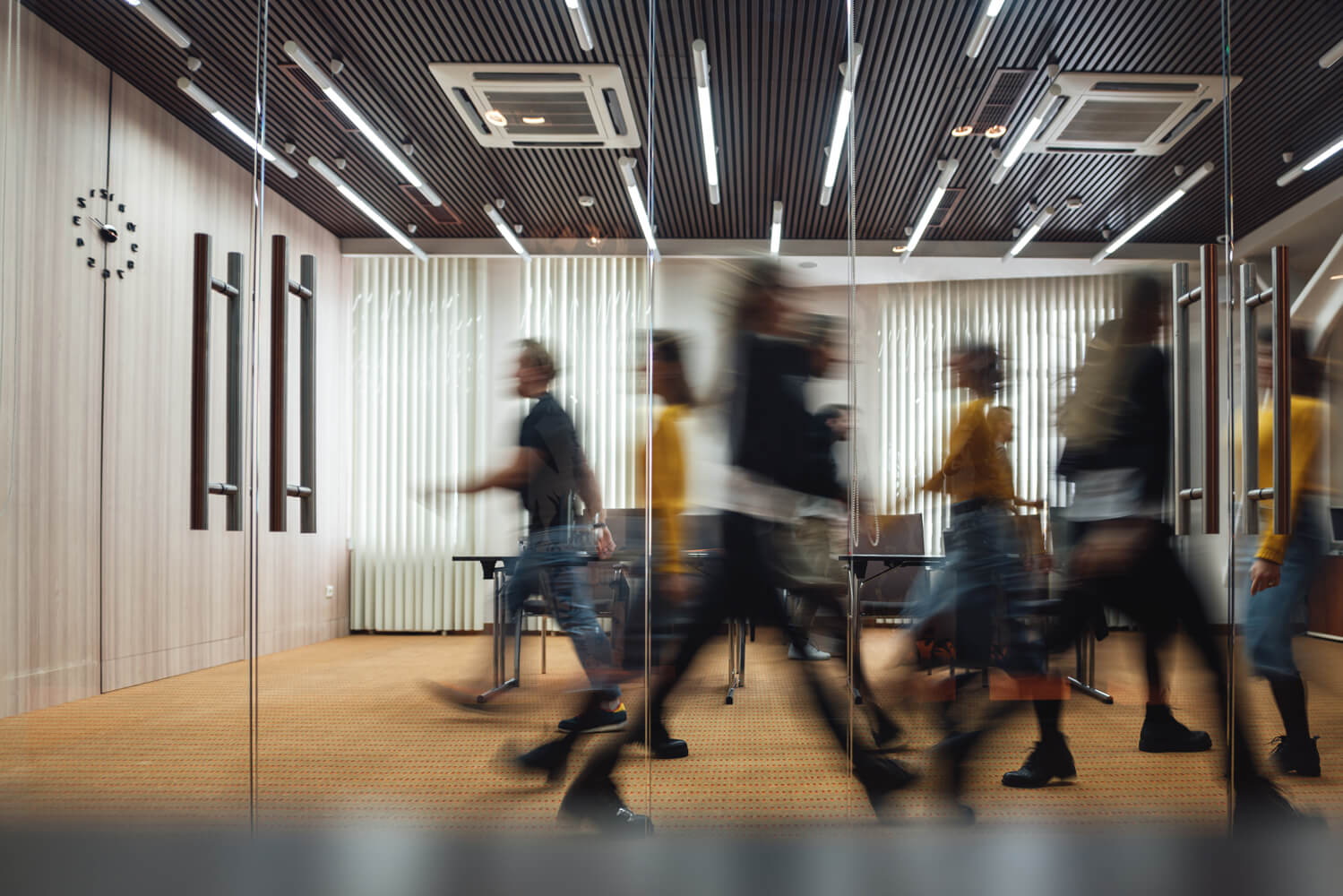
Movement in the Office: How Small Shifts in the Workplace Improve Health

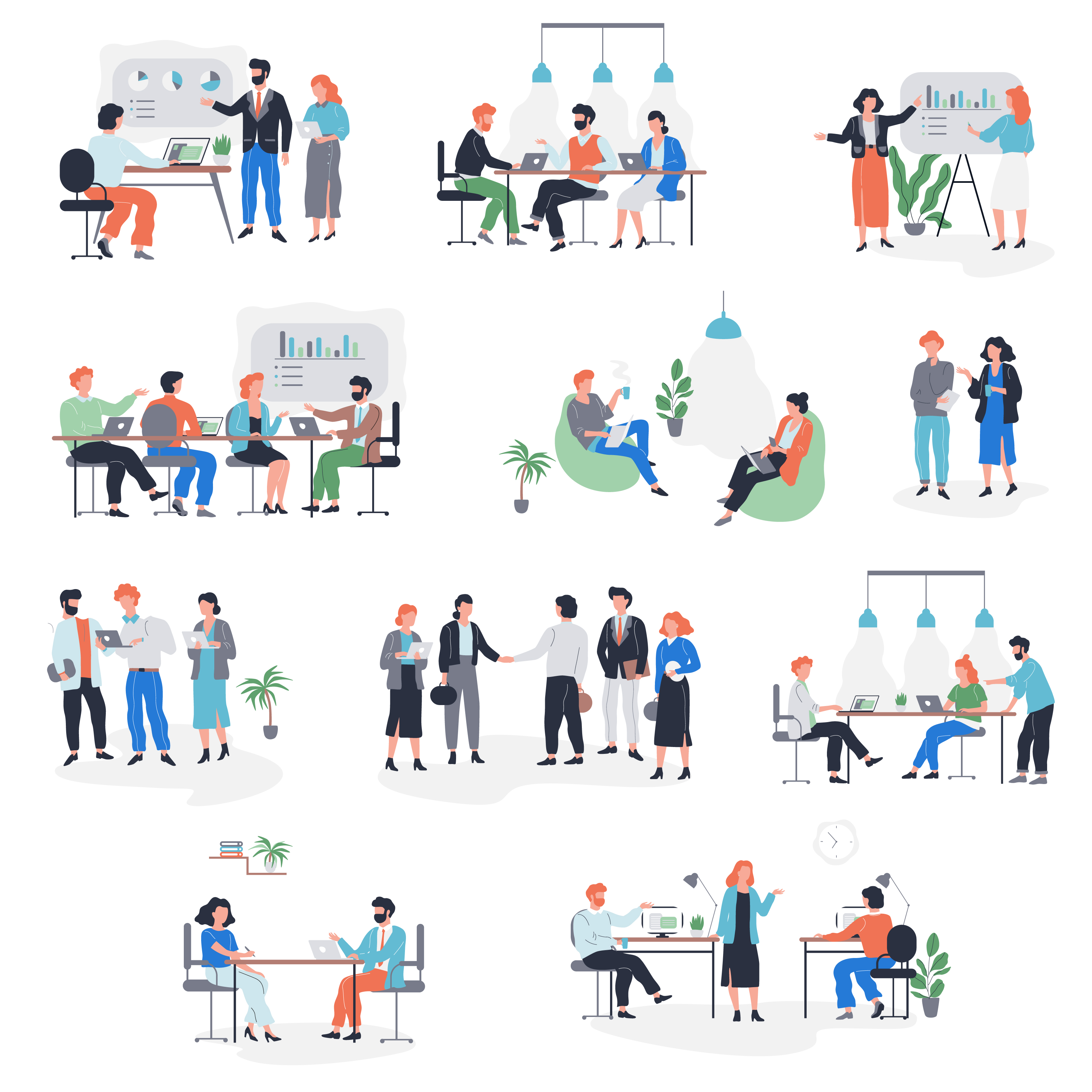
The importance of moving beyond the chair and walking pad.
Since I started my professional career, there have been many days when I’ve gone to pack up my computer only to realize I hadn’t moved more than a brief step outside for hours. This would often lead me to rush home for a hike or some stretching in an attempt to compensate for my limited movement throughout the day. Until recently, I didn’t think there was anything I could do. That was until I decided to research ways to move throughout my day that I realized that there were experts who have done extensive research on this phenomenon in the workplace. This research is increasingly getting brought into mainstream awareness through building certifications like WELL and Fitwel which allow both organizations and designers to come armed with practical knowledge for embedding movement into any building project. At its core, this shift reflects a growing understanding of the negative side effects of a sedentary lifestyle, especially in the workplace.

The Problem
When you hear the word “sedentary,” what comes to mind? Most likely, a person is sitting hunched over their computer. But what about someone who has been standing in the same position all day; would that count as sedentary? If you’re well-versed in movement science, you might say yes. If not, this may be a new concept. Wherever you stand, most of us are aware of the negative effects of not moving enough. Especially since, according to the American Heart Association, ~43% of all US jobs are considered high-sedentary.
Dr. Joan Vernikos, former Director of NASA’s Life Sciences, defines being sedentary as “…the opposite of exercising. Sedentary living mean being chronically seated or inactive for most of the day.” (Sitting Kills, Moving Heals, Ch.3). This type of inactivity has been linked to a wide range of health issues, including loss of bone mass, reduced circulation, and lower energy expenditure (Health Risks of an Inactive Lifestyle, medlineplus.gov).
So, we know there is a problem, but what can be done to improve employee health and even make people want to return to the office? The many strategies available can be generally grouped into three categories: micromovements, macromovements, and environment-induced movements. Each plays a unique role in combating sedentary behavior throughout the workday.
The Solutions
Micromovements: Small Actions, Big Impact
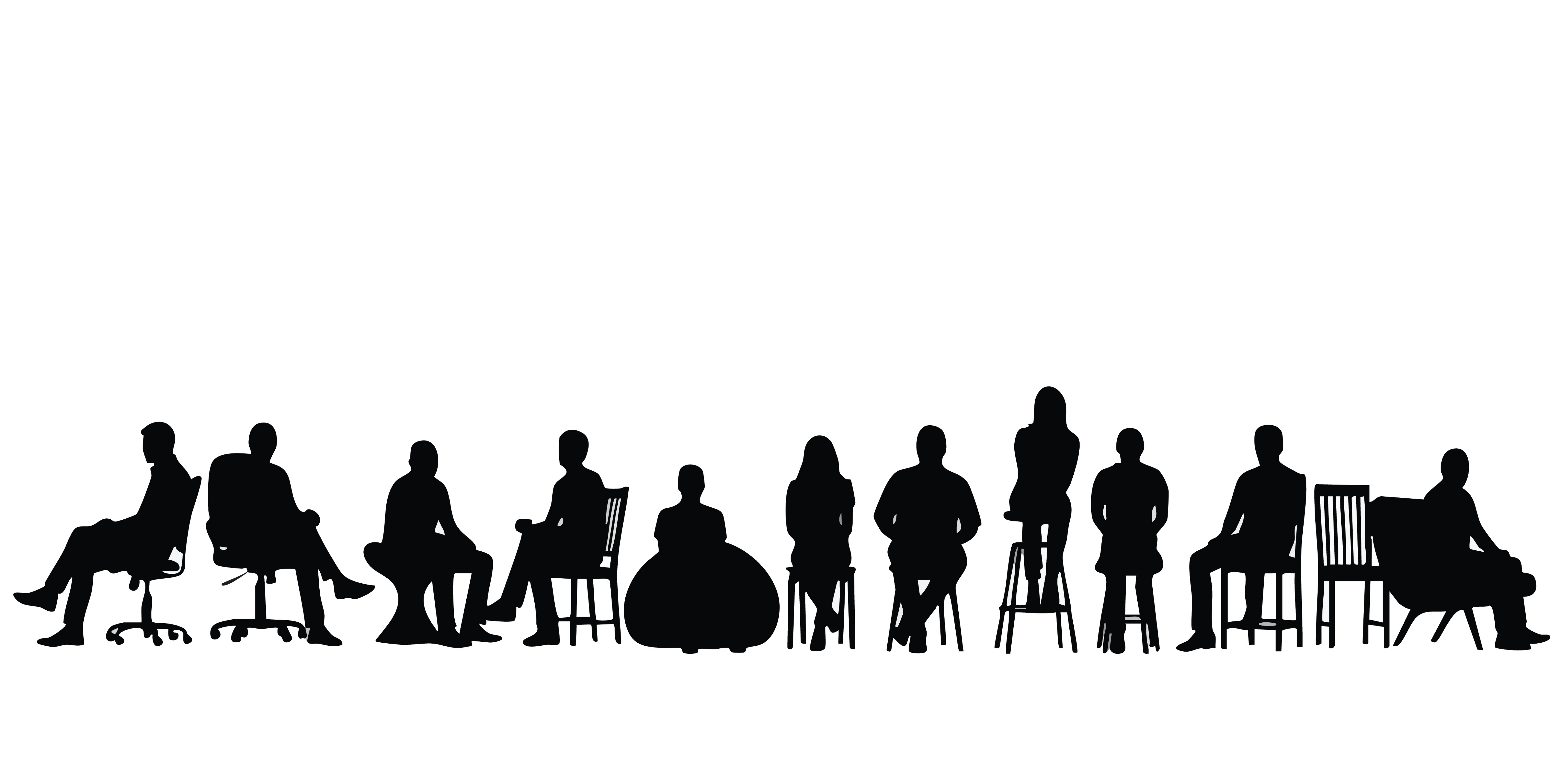
The easiest (and cheapest) solution to encourage more movement in the workspace is what can be described as micromovement or small, subtle movements that require little physical effort. Think of this as resituating your standing posture to incorporate a bent leg resting on a cushion or chair. Both WELL and Fitwel encourage active workstations which make it easier for employees to increase the diversity of their positions. Even something as simple as standing and leaning on the wall while listening in on a meeting instead of remaining sedentary in one standing/sitting position. Bowman in Move Your DNA describes over 25 different sitting postures alone!
Macromovements: Intentional, Full-Body Motion
While sitting and standing are good places to start, the next step to bring your workspace into a more health-centered environment is to incorporate macromovements. These are large, more intentional whole-body movements. This looks like taking a squat or lunge break every hour. Similarly, taking more meetings walking would count towards this category. Our consultants at BranchPattern have been actively seeking creative ways to incorporate walking paths with substantial vegetation to make this easier for employees. Anecdotally, during the cold Pittsburgh, PA winter, I‘ve even been known to push out (pun intended) some push-ups to get warm after walking outside.
Environment-Induced Movement: Passive Power of Active Design
Finally, we have the last movement category. This one requires the most investment into space and is considered more of a novel approach where certifications like Fitwel and WELL are just starting to scratch the surface. In projects like the McGuire Iron Manufacturing Facility (Sioux Falls, SD, USA), the BranchPattern health & wellness consultants have extensive experience incorporating multiple Fitwel credit strategies that facilitated greater environment induced movement (think multiple standing desks options for office and manufacturing workstations). But remember environment-induced movement goes beyond the desk, chair, and squats. It’s about designing spaces that encourage motion through layout and features. An example of this would be to have low tables that require you either to sit in a deep squat or kneel on a pillow. The nature of kneeling requires you to reposition yourself multiple times through the course of the working session and by default move more. Additionally, having more modular furniture that allows for easy reconfiguration based on the daily needs of the employee (think moveable partitions, hanging gymnastic rings for stretching, or balance ball chair with wheels).
In Summary
Movement does not need to feel like another item on your to-do list. It can be easily incorporated into the office to support a sustainable and healthy working environment. And through learning more about micro, macro, and environment-induced movements, the options are limitless to what a modern built environment could look like. And if you are still unsure as to where to start, BranchPattern’s health & wellness consultants are poised to help organizations and employers find the right mix of micro, macro, and design-driven strategies to keep employees moving. Let’s reimagine workplaces that make health a natural part of the day!
Talk to one of our experts to learn more.
View More Resources
Benefit from our expertise